We consult
with
creative
firms to
Refine
Evolve
Elevate
Their
business
strategies
and practices
What We do
We offer
customized
business
solutions
So that
our clients
are able to
- Envision and plan for their future
- Position themselves to stay competitive
- Build strong industry reputation, recognition, and relationships
- Pursue, qualify, and attract new business prospects and talent
- Refine, evolve, and elevate their organizational structure
- Improve how they manage their team and culture
- Generate more competitive and successful business strategies and communications
- Reimagine existing processes to increase efficiency and effectiveness
-


Our Differentiators
When advising our clients in the services listed above, we utilize a variety of tools and experiences to inform our recommendations including:
-
Because we work with hundreds of different firms, we have unparalleled insight into the latest trends and tactics as well as an opportunity to identify, test, and refine best practices. We leverage these ideas and strategies to elevate our clients’ business practices and evolve the creative industry overall.
-
Emily is certified to conduct DISC and 12 Driving Forces assessments for our clients and their teams. These assessments help us examine the behaviors we each bring to our job—the “how we act” the way we do—and the motivators—the “why we act” the way we do. The assessment helps us work with our clients to:
- Reveal behavioral preferences, individual motivators, and unique strengths
- Hire, develop, and advance the right talent
- Increase employee productivity
- Improve communication
- Reduce partner and/or workplace conflict
- Build team-wide harmony and understanding
-
We only work with creative firms. As we are both left- and right-brain thinkers, we have a dual perspective that helps us consider, balance, and understand the needs of both the creative and operational sides of managing a business. We’re not cookie-cutter consultants—we know what you do, how you do it, and why you do it. We understand why you love the creative industry, because we love it too!
-
We believe that being women in a male-dominated consulting industry has given us an advantage in how we think about client relationships and business strategy. Our approach utilizes both our knowledge and love of business as well as compassion and flexibility. We put aside our egos, care deeply, and are personally invested in our clients’ long-term success.
Who We Are

Emily Cohen
-
Emily is a no-nonsense business consultant who has partnered with 500+ leading creative firms worldwide. She has developed, tested, and refined key insights and strategies that have allowed our clients’ businesses to become more effective, profitable, and fun to work at. She is a designer by degree, an avid reader, dog-lover, a trend-spotter, a connection-builder, and an industry advocate.
-
Emily is a frequently requested main stage speaker within the creative industry and has spoken at hundreds of international, national, and local conferences and events for organizations such as: Creative Mornings, AIGA, Association of Registered Graphic Designers (RGD), The Type Directors Club (TDC), and Creative South. Her talks reflect her expertise in the latest trends and common pain points in running and evolving a creative business, from positioning, new business development, and conflict management to organizational and pricing strategies.
Podcast Guest
Emily has also been a guest on numerous industry-focused podcasts both nationally and internationally including: The Futur, JUST Branding Podcast, The Digital Agency Show, The Brand Master Podcast, and Design Of Podcast. -
For over ten years, Emily has taught the Business of Design at premier universities including: New York University (NYU), Fashion Institute of Technology (FIT), and Tyler School of Art and Architecture at Temple University. She is also a LinkedIn Learning Instructor and has developed several courses for the platform.
-
Emily is proud to include author among her credentials. In 2018, she self-published her business book for creatives, Brutally Honest: No-bullshit business strategies to evolve your creative business. The book has become a go-to business book for creative industry professionals worldwide (5,000+ copies sold!), and several universities use it as a teaching tool. Brutally Honest was recognized with a Judges Choice Award in the Mohawk Show.

Hunter Vargas
Associate Consultant
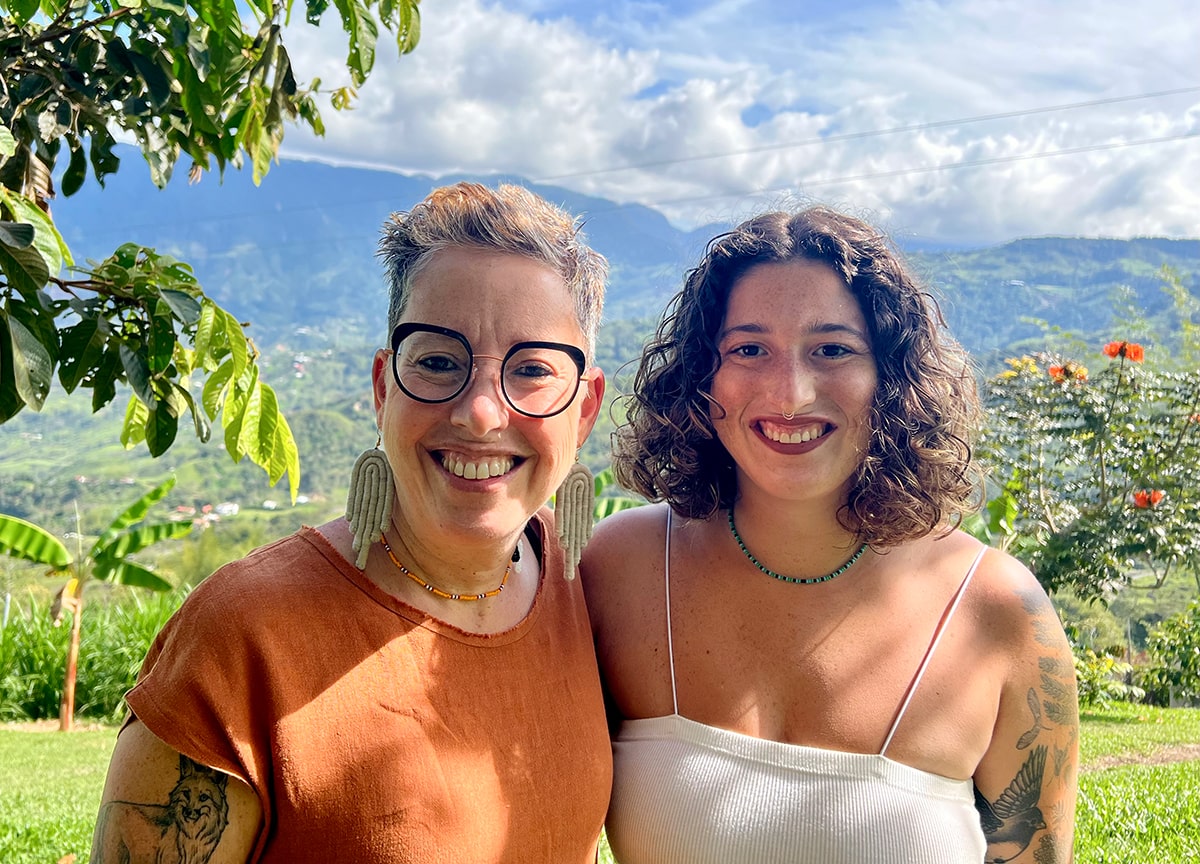
After working with multiple creative firms, Hunter officially joined Emily’s practice in Summer 2022 to grow our practice, elevate our offerings, and provide a fresh perspective to our clients. She is probably familiar to many of you as she has been an integral part of Emily’s business for the past couple of years, consulting directly with our clients as well as bringing Brutally Honest (Emily’s book) into the world. Her experience as a marketer, project manager, client partner, and business development manager paired with her on-the-ground insight and unique, younger perspective is a huge asset to our consulting practice. Hunter truly knows our industry inside and out.
She also happens to be Emily’s daughter and can read her mind so they work together seamlessly, complementing each other in many ways. (And, don’t worry—we’re in therapy. 😉 )
Why Casa Davka?
The brief we gave to our wonderful naming team (María Silva and Nihilo) was simple—we wanted a name that:
-
We’re mother & daughter, we’re best friends, we’re business partners, and we are invested in our clients in a way that is caring and human.
-
The industry is always evolving so we wanted a name that was intriguingly ambiguous.
-
Strong, honest, nurturing, impassioned, direct, and with just the right amount of tough love.
-
Our cultural heritage and generations, how we each think about and approach the work, and more.
And, thus, “Casa Davka” was born! “Casa” is “house” in Spanish, reflecting our family ties, the caring relationships we forge with our clients, and our investment in the future of the industry.
“Davka” is a Hebrew word that is very hard to define—like us and our business. It translates to something like “Definitely or exactly stated; specifically, or despite expectations to the contrary”, often with a slightly amused or ironic feeling.
Casa Davka pays homage to the value we place on our relationships and different cultures with a nod to our honest, distinctive approach.
Who We Work With
We partner with
amazing
creative
firms,
All of whom
inspire and
challenge us
(and us, them).
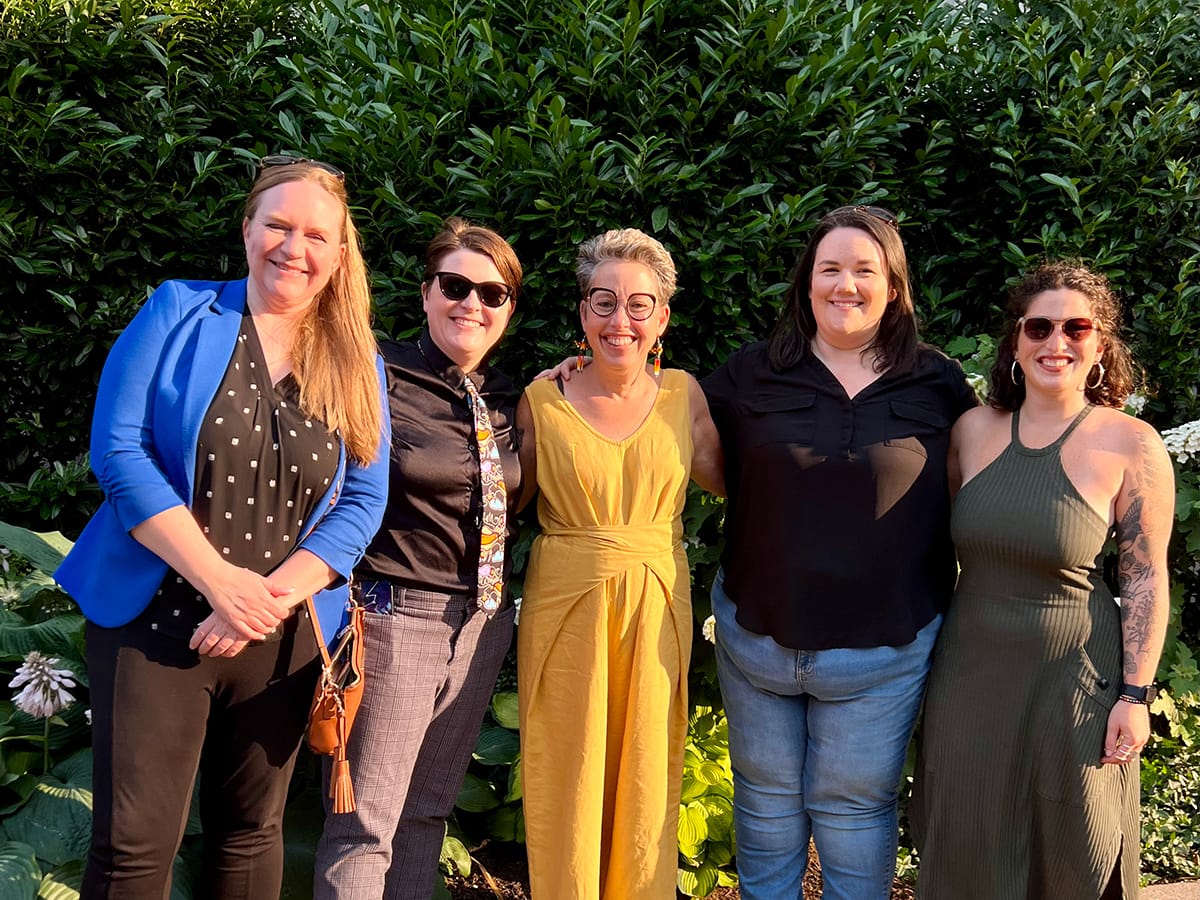
Some have written monographs or designed stamps for USPS while others have been recognized as national AIGA Medalists or as local AIGA Fellows. One of our clients won the National Design Award and another won a Grammy! While many of our clients are renowned in the industry, some are emerging or aspirational firms. Everyone we work with is smart, talented, and cares deeply about how their actions and practices impact the work we do. A large portion of our clients are graphic design firms that specialize in branding, digital, editorial, packaging, experiential, wayfinding, and more, but we also work with marketing, industrial, interior, and service design agencies. And, we couldn’t be prouder to work with every single one of them!
Our Book
Brutally
Honest
No bullshit
strategies
to evolve
your
creative
business
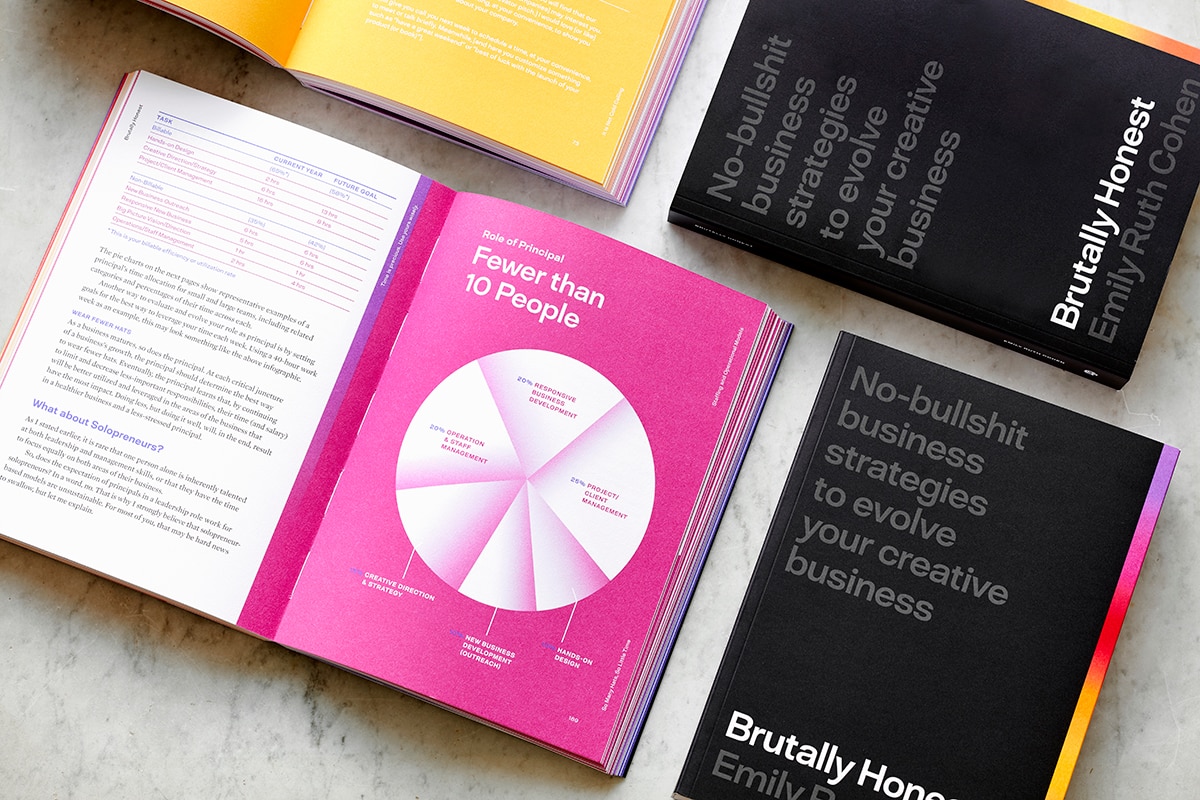
Brutally Honest is chock full of advice, insights, best business practices, and actionable strategies and includes 20 compelling, real-world case studies from other creative professionals. Critical business challenges explored and addressed in this book include: positioning & specialization, marketing, case studies, new business development, strategies for qualifying new clients, pricing, retainers, proposals, contracts, organizational structures, staff management, client and project management, creative briefs, and industry trends. Unlike many other professional practice books for our industry, Brutally Honest is designed for visual learners and includes colorful, illuminating information graphics and checklists, as well as short, insightful sound bites and quick wins.
Brutally Honest is out-of-print but, you can order the e-book!
$28 + tax
PDF & EPUB formats
Questions? Email me!